Tax Updates
5 min read
Quick summary
💰 Everyone pays a bit less tax — a small cut that happens automatically, no action needed.
👔 Employers must change how they pay super — from quarterly to every payday, with real penalties for getting it wrong.
🏦 A new tax on very large super balances — but only if your super is over $3 million (most people can skip this one).
1. Everyone gets a small tax cut 💰
From 1 July 2026, the tax rate on the income you earn between $18,201 and $45,000 drops from 16% to 15%.
What that means in real money:
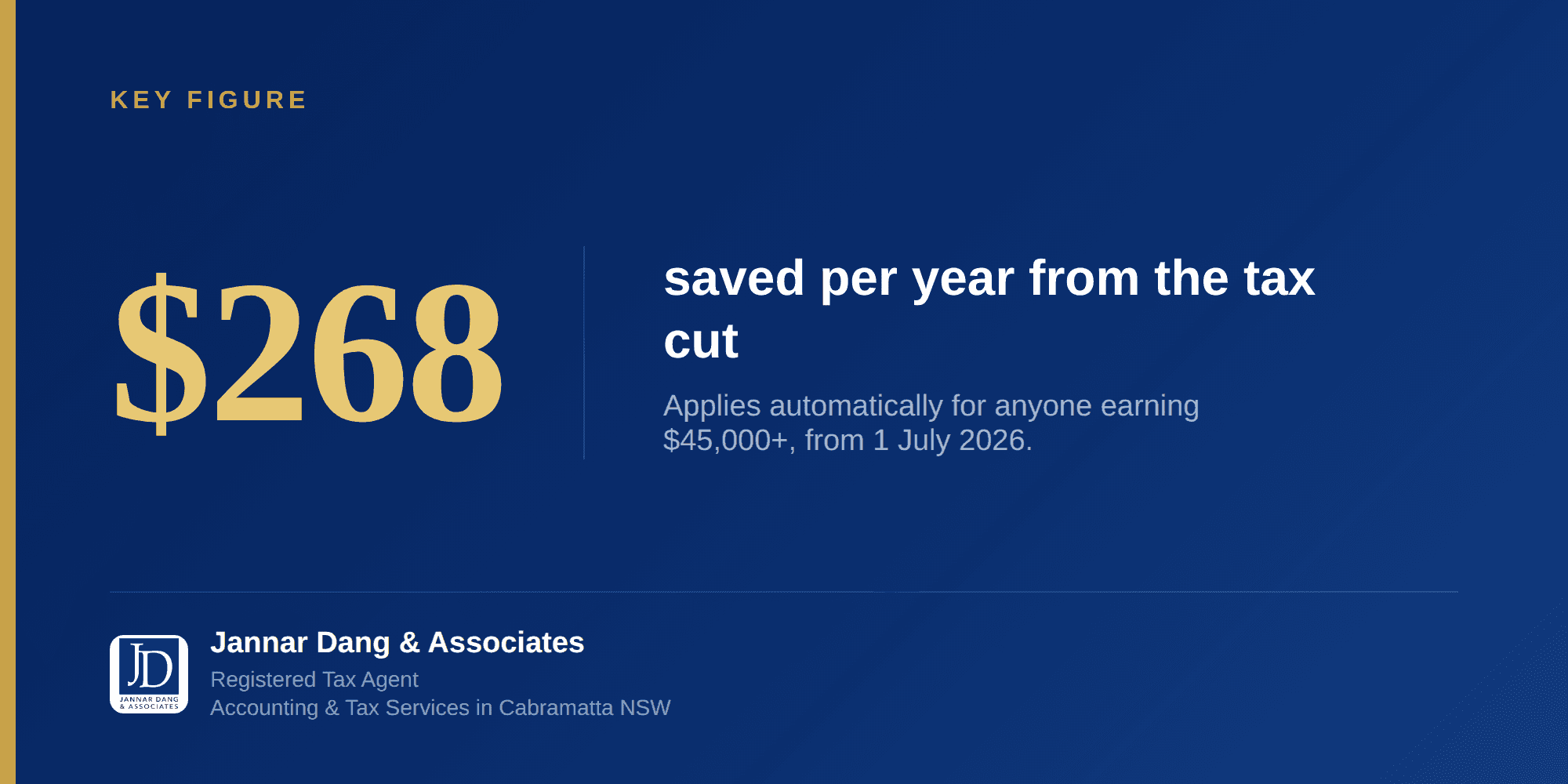
If you earn $45,000 or more, you'll save about $268 a year
If you earn $30,000, you'll save about $120 a year
It happens automatically through your pay — you don't need to do anything
The rate drops again to 14% from 1 July 2027, so the saving grows
Bottom line: a little extra in your take-home pay, with zero effort on your part.
2. Big changes for employers: "Payday Super" 👔
If you run a business and pay staff, this is the one to pay attention to. From 1 July 2026, you must pay your employees' super at the same time as their wages — not quarterly like before.
The key points:
Super must reach the employee's fund within 7 business days of payday
The rate stays the same (12%), but it's now due far more often
The ATO's free Small Business Clearing House closes on 30 June 2026 — if you use it, you'll need another way to pay super before then
Paying late triggers a penalty charge that is not tax-deductible and can be steep
Bottom line: check that your payroll system (and your accountant) are ready for this well before July — it's a much stricter system than before.
3. A new tax on very large super balances 🏦
This only applies if your total super balance is over $3 million. If it's not, you can skip this section.
For the small number of people with very large super, a new tax (officially called Division 296) starts from 1 July 2026:
An extra 15% tax applies to the earnings on the part of your balance above $3 million
An additional amount applies to balances above $10 million
The first tax bills won't arrive until the 2027–28 financial year
If you have a self-managed super fund (SMSF), there are some one-off choices worth making early
Bottom line: most people aren't affected — but if your super is near or above $3 million, talk to us, because decisions made now can make a real difference.
What you should do
✅ Individuals: nothing needed for the tax cut. If your super is near $3 million, get in touch before 30 June 2027.
✅ Business owners: make sure your payroll can pay super every payday, and sort out a replacement for the Small Business Clearing House before 30 June 2026. Don't leave it to the last minute.
Not sure how these changes affect you? That's exactly what we're here for.
Jannar Dang & Associates Pty Ltd — Tax agent & CPA Australia Member
Office address: 12/76-80 John Street, Cabramatta NSW 2166
Phone: (02) 9794 8800 | Email: jannardang@jannardang.com.au
This article contains general information only and does not take into account your personal circumstances. It is not a substitute for professional advice. Please contact Jannar Dang & Associates for further advice.
Official sources (ATO):
Personal income tax cuts → https://www.ato.gov.au/about-ato/new-legislation/in-detail/individuals/personal-income-tax-new-tax-cuts-for-every-australian-taxpayer
Payday Super → https://www.ato.gov.au/businesses-and-organisations/super-for-employers/payday-super/about-payday-super
New tax on large super balances → https://www.ato.gov.au/individuals-and-families/super-for-individuals-and-families/self-managed-super-funds-smsf/smsf-newsroom/better-targeted-super-concessions-is-law